AML Policy
How Paywora prevents money laundering, terrorist financing and fraud: the checks we run, what we monitor, and what it means for you.
Last updated
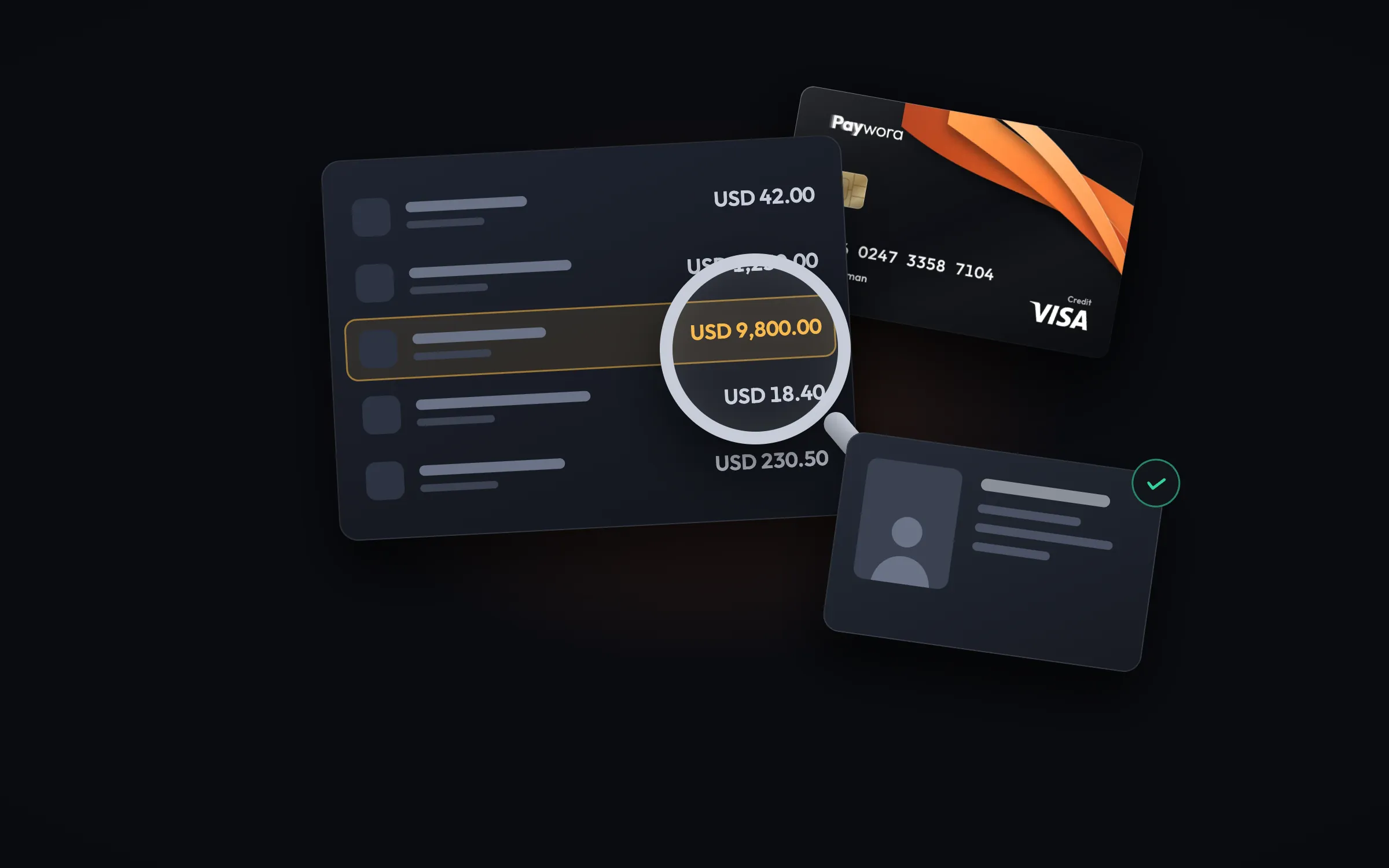
The short version
- We verify who you are before you can top up or create cards, and we may check again later.
- We screen customers against sanctions lists, and we don't serve sanctioned people or places.
- We monitor top-ups, payments and withdrawals for signs of money laundering, terrorist financing and fraud.
- We may ask where your money comes from, and hold a transaction while we check.
- Where the law requires it, we report suspicious activity, and we may not be allowed to tell you.
A summary to help you find your way. The full text below is what applies.
1.Our commitment
HostSky Limited, trading as Paywora, is committed to keeping its services from being used for money laundering, terrorist financing, sanctions evasion or fraud. This policy explains, in plain terms, how we do that and what it means for you.
It applies to every Paywora account, and to our team and partners. We follow the anti-money-laundering and counter-terrorist-financing laws that apply to us, the rules of the Visa and Mastercard networks, and the requirements of our card-issuing and payment partners.
2.Knowing our customers
We verify the identity of everyone who opens an account before they can top up or create cards. We usually ask for:
- your full name, date of birth, nationality and home address;
- a photo of a valid government-issued ID document;
- a selfie, to check that you're the person on the document;
- sometimes, a recent document that proves your address.
For a business account, we also verify the business itself, the people who own or control it (its beneficial owners), and the people who act for it.
We use trusted identity-verification providers to run these checks. If we can't verify who you are, we can't open or keep your account. We check again from time to time, for example when a document expires or your details change.
3.Enhanced checks
Some customers and some activity need a closer look: for example if you're a politically exposed person or close to one, if your activity is unusually large or complex for your account, or if it involves higher-risk countries. We may then ask:
- where the money you add comes from (source of funds);
- how you came to have your wealth (source of wealth), where it's relevant;
- what you'll use Paywora for, and how much you expect to spend.
We review higher-risk accounts more often, and a senior member of our compliance team must approve them.
4.Sanctions screening
We screen every customer, and the people behind business customers, against international and national sanctions lists and lists of politically exposed persons, when they sign up and regularly afterwards.
We don't open accounts for, or process payments with, sanctioned people or organizations, and we don't serve countries and territories where sanctions stop us from doing so.
5.Monitoring transactions
We monitor top-ups, card payments and withdrawals, with automated rules and reviews by our team, for activity that doesn't fit an account or looks like financial crime. For example:
- top-ups or payments that are unusually large or frequent for the account;
- money split into smaller amounts to stay under a limit or avoid a check;
- top-ups from cards, bank accounts or crypto wallets that don't belong to the account holder;
- payments involving higher-risk merchants or countries.
6.Crypto top-ups
You can top up your wallet with USDT and USDC. Before we credit a crypto top-up, we may check the sending address and the transaction's history on the blockchain for links to illicit activity, such as sanctioned wallets, darknet markets or stolen funds.
If a top-up is linked to illicit activity, we may hold it, return it where the law allows, and report it. Because crypto payments can't be reversed, send only from a wallet that's yours.
7.When we need to check something
If something needs a closer look, we may:
- Ask you for information
- Documents, or an explanation of a payment or a top-up. Some features may pause until we have what we need.
- Hold or decline a transaction
- A top-up, a payment or a withdrawal can be held, delayed or declined while we check it.
- Return a top-up
- Money can go back to where it came from, where the law allows.
- Limit or close your account
- We may freeze your cards, limit what your account can do, or close it.
We'll tell you what we need and why whenever we're allowed to. If we can't complete a check, for example because we don't hear back, we may have to close your account.
8.Reporting suspicious activity
Where the law requires it, we report suspicious activity to the relevant authorities, and we cooperate with lawful requests from law enforcement. The law may stop us from telling you that we've made a report, or why a transaction was held, and we can't make exceptions to that.
9.Keeping records
We keep records of identity checks, transactions and our reviews for as long as anti-money-laundering laws require, including after an account is closed. They're protected as our Privacy Policy describes.
10.Training and oversight
Our compliance team is responsible for this policy and the procedures behind it, and reports to our senior management. Everyone at Paywora who works with customers or payments is trained to recognize and report signs of financial crime. We review this policy regularly, and whenever the law or our services change.
This page is a summary. Our internal procedures go into more detail, and we don't publish them, because that would help people get around them.
11.What we ask of you
- Give us accurate information, and tell us when it changes.
- Use your account and cards only for yourself or your business, never for anyone else.
- Top up only from cards, bank accounts and crypto wallets that are yours.
- Answer our requests for information promptly.
- Tell us if you think someone is using your account to move money that isn't yours.
Using Paywora for money laundering, terrorist financing, fraud or getting around sanctions breaks our Terms and Conditions, and we'll act on it.
Questions about this policy? Write to [email protected]. For help with your account, write to the same address from the email on your account.